Why Did My Dasha Change? Understanding Mahadasha and Antardasha Dates
Learn why Dasha dates transition over time and why slight birth time differences alter calculated planetary periods.

Noticing a shift in your calculated Dasha results between visits to an astrology app can feel unsettling. If you’re asking why did my Dasha change, the answer usually comes down to small but meaningful details in how the calculation was performed. This guide walks through exactly what drives these transitions and discrepancies.
What Causes One Mahadasha to End and Another to Begin?
Each Mahadasha carries a fixed duration assigned by the Vimshottari Dasha system. When that duration elapses, the sequence automatically advances to the next planet in the predetermined order.
This transition happens on a specific calculated date unique to your birth chart, marking a Dasha change from one ruling planetary influence to the next in the nine-planet cycle.
How Mahadasha Dates Are Calculated
Mahadasha dates stem from your birth Nakshatra and the exact degree of the Moon within it. This degree determines how much of your first Mahadasha remained at the moment of birth.
From that starting balance, each subsequent Mahadasha’s start and end date follows predictably, adding the planet’s fixed duration onto the previous period’s end date in sequence.
Why Antardasha Dates Change Within a Mahadasha
Just as Mahadashas follow each other in sequence, so do the nested Antardasha periods within them. Each sub-period’s length is proportional to both the main and sub-period planet’s assigned duration.
This means Antardasha dates shift more frequently than Mahadasha transitions, sometimes changing every few months, which explains why your short-term Dasha result updates more often than your long-term one.
How the Dasha Sequence Determines Each Planetary Period
The Dasha sequence always follows the same fixed planetary order: Ketu, Venus, Sun, Moon, Mars, Rahu, Jupiter, Saturn, Mercury. This order never varies between individuals.
What varies is your personal starting point within that sequence, determined entirely by your birth Nakshatra, which is why your Dasha timeline looks unique despite sharing the same underlying structure as everyone else.
Why Small Birth-Time Differences Can Shift Dasha Dates
A recorded birth time off by even ten or fifteen minutes can shift the Moon’s calculated position enough to change your starting Nakshatra degree, altering your entire subsequent timeline.
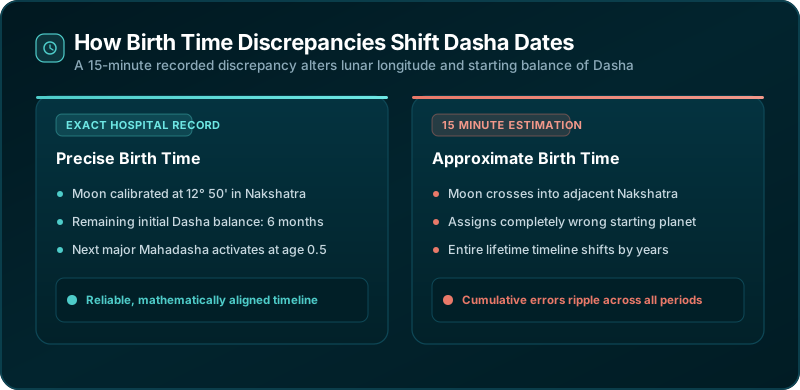
This sensitivity explains why two calculations using slightly different birth times for the same person can produce Mahadasha dates that differ by months or even years down the line.
What Happens When Different Calculators Show Different Periods?
If two Dasha calculator tools produce different results for identical birth details, the discrepancy typically traces back to differing Ayanamsha settings or rounding conventions used internally by each platform.
Always verify that both tools use the same Ayanamsha, most commonly Lahiri, before assuming one calculation is simply wrong.
How to Check Your Previous and Upcoming Dasha Transitions
Most Dasha calculator platforms display a full chronological table listing every Mahadasha across your lifetime, letting you scroll through past periods and preview upcoming Dasha transition dates at a glance.
| Mahadasha | Approx. Duration |
|---|---|
| Ketu | 7 years |
| Venus | 20 years |
| Sun | 6 years |
| Moon | 10 years |
Reviewing this full table helps you understand where you currently sit within your broader lifetime sequence.
Why Dasha Periods Have Different Lengths
Each planet in the Vimshottari Dasha system carries a traditionally assigned duration, ranging from six years for the Sun to twenty years for Venus, based on classical astrological texts.
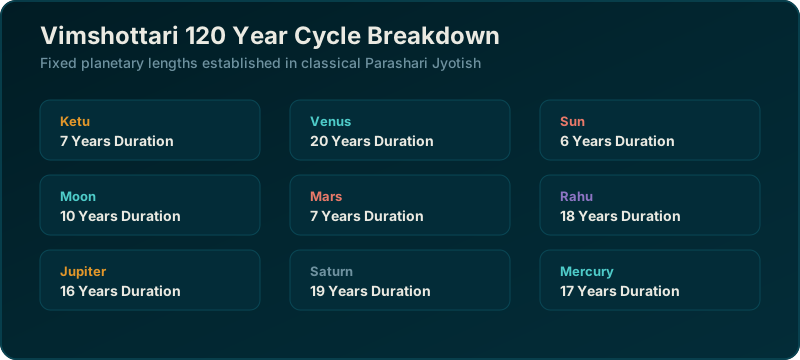
These fixed lengths are why some Mahadasha duration periods feel notably longer than others, a structural feature of the system rather than something calculated individually per person.
How to Read a Complete Mahadasha and Antardasha Timeline
A full timeline nests Antardasha periods beneath their parent Mahadasha, showing both the broader multi-year theme and the shorter sub-period currently active within it.
Reading top to bottom, chronologically, gives you a complete picture of your Dasha timeline, past, present, and future, all derived from that single starting calculation at birth.
Conclusion
If you’ve wondered why did my Dasha change, the explanation almost always traces back to either the natural progression of the fixed Vimshottari sequence or small differences in birth time and calculation settings between tools. Once you understand how Mahadasha and Antardasha dates derive from your birth Nakshatra, these shifts stop feeling mysterious and start making logical sense within the broader system.
Calculate Your Active Dasha Now
Discover which planet is influencing your life path and unlock your personalized astrological timeline.
Open Free Dasha Calculator →